
Day Trips from Oaxaca: 8 Must-Visit Places in 2025
Oaxaca, a region of Mexico known for its vibrant cultures, deep historical roots, and breathtaking landscapes, offers much more beyond Oaxaca City itself.
While the city is a magical place that should be explored in depth (see 3 Days in Oaxaca: The Best Things to do for First Timers in 2025), taking day trips from Oaxaca allows you to discover more of the soul of this region – its ancient civilizations, its sacred landscapes, and the lives of the people who keep these traditions alive.
In this guide, we’ll explore the best day trips from Oaxaca City, designed for travelers who want to go beyond the surface, learn more about the region’s histories, and travel responsibly. These trips highlight the deep connection between the land, its people, and their ancient cultures, offering you a way to build a meaningful relationship with Oaxaca.
Quick Travel Resources
🛫 WISE – Multi-Currency Debit Card
🛫 REMITLY – International Money Transfer
8 Must-Visit Day Trips from Oaxaca
1. Monte Albán: A Window into Zapotec Civilization
Just 10 kilometers west of Oaxaca City, Monte Albán is one of the most important archaeological sites in all of Mexico and one of the best day trips from Oaxaca.
This UNESCO World Heritage Site was the heart of the Zapotec civilization for over a thousand years, serving as a political, cultural, and religious center from 500 BCE to 800 CE.
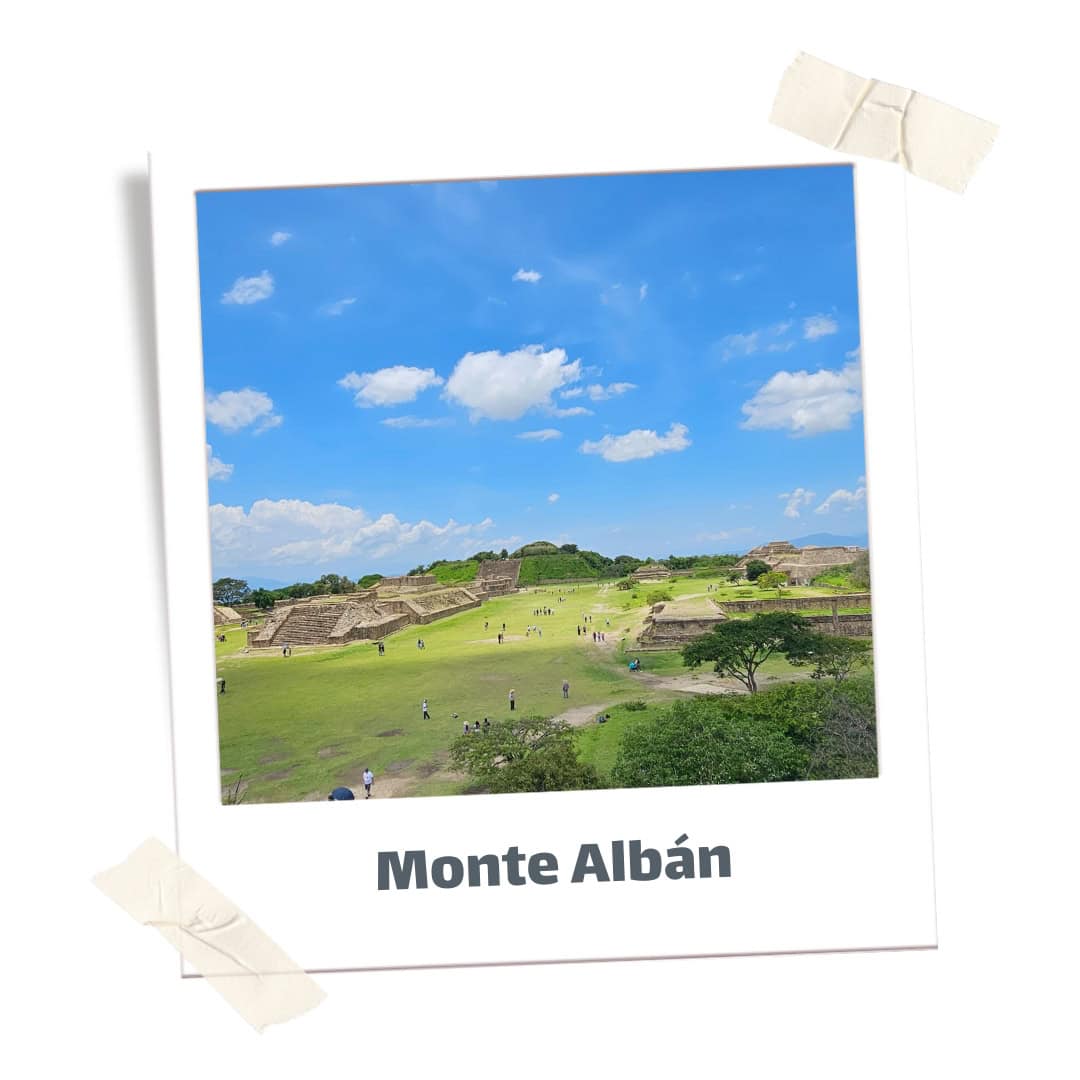
Photo Ⓒ Daena Crosby
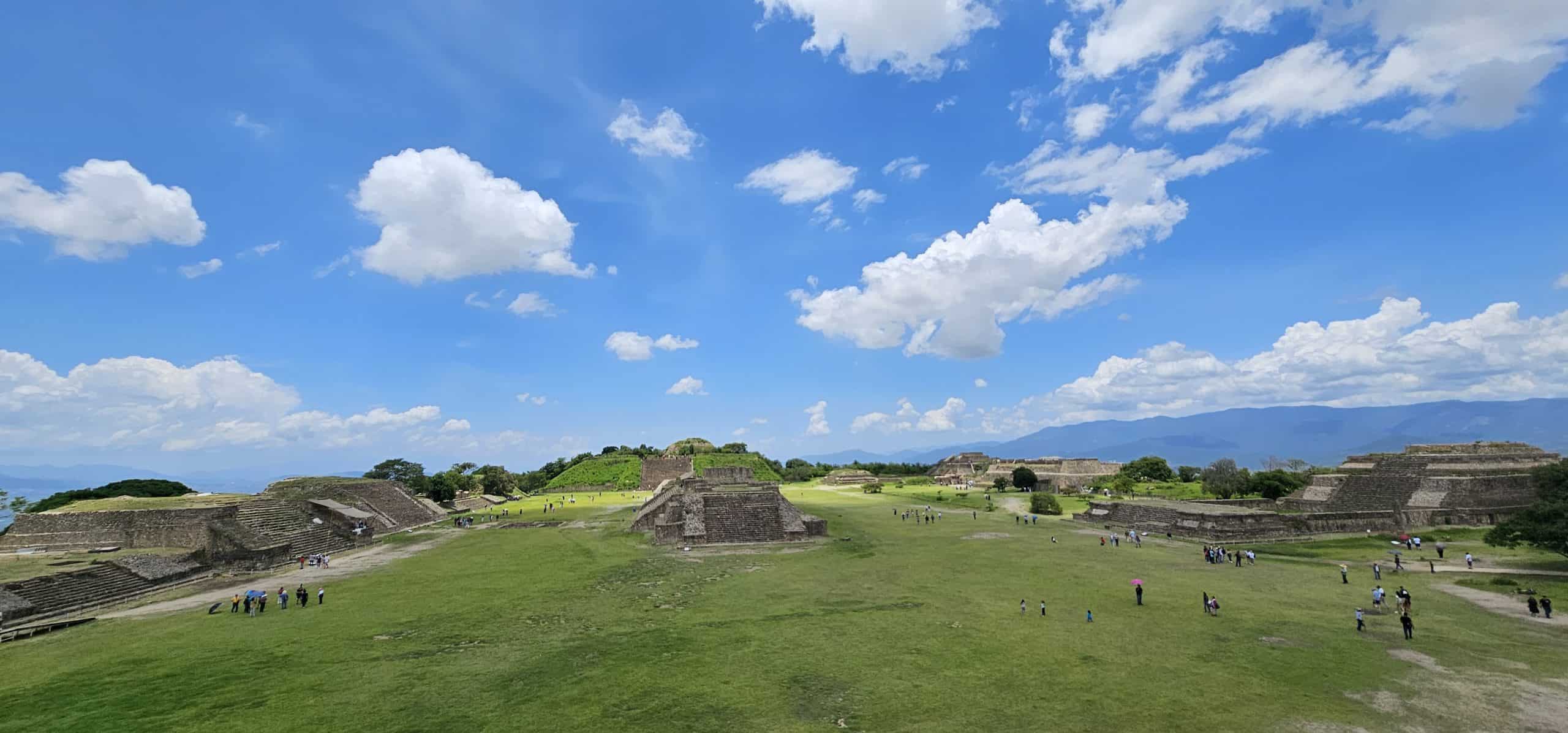
Photo Ⓒ Daena Crosby
Exploring the Ruins
Photos Ⓒ Daena Crosby
At Monte Albán, you’ll be walking through a city that thrived long before European colonization.
The Grand Plaza, an impressive space flanked by temples, pyramids, and platforms, is the site’s central feature.
Here, the Zapotecs held ceremonies, played ritual ball games, and controlled vast stretches of the surrounding valleys.
You can still see the Ball Court, where games had not just recreational significance but spiritual meaning, symbolizing life, death, and the cycle of the cosmos.
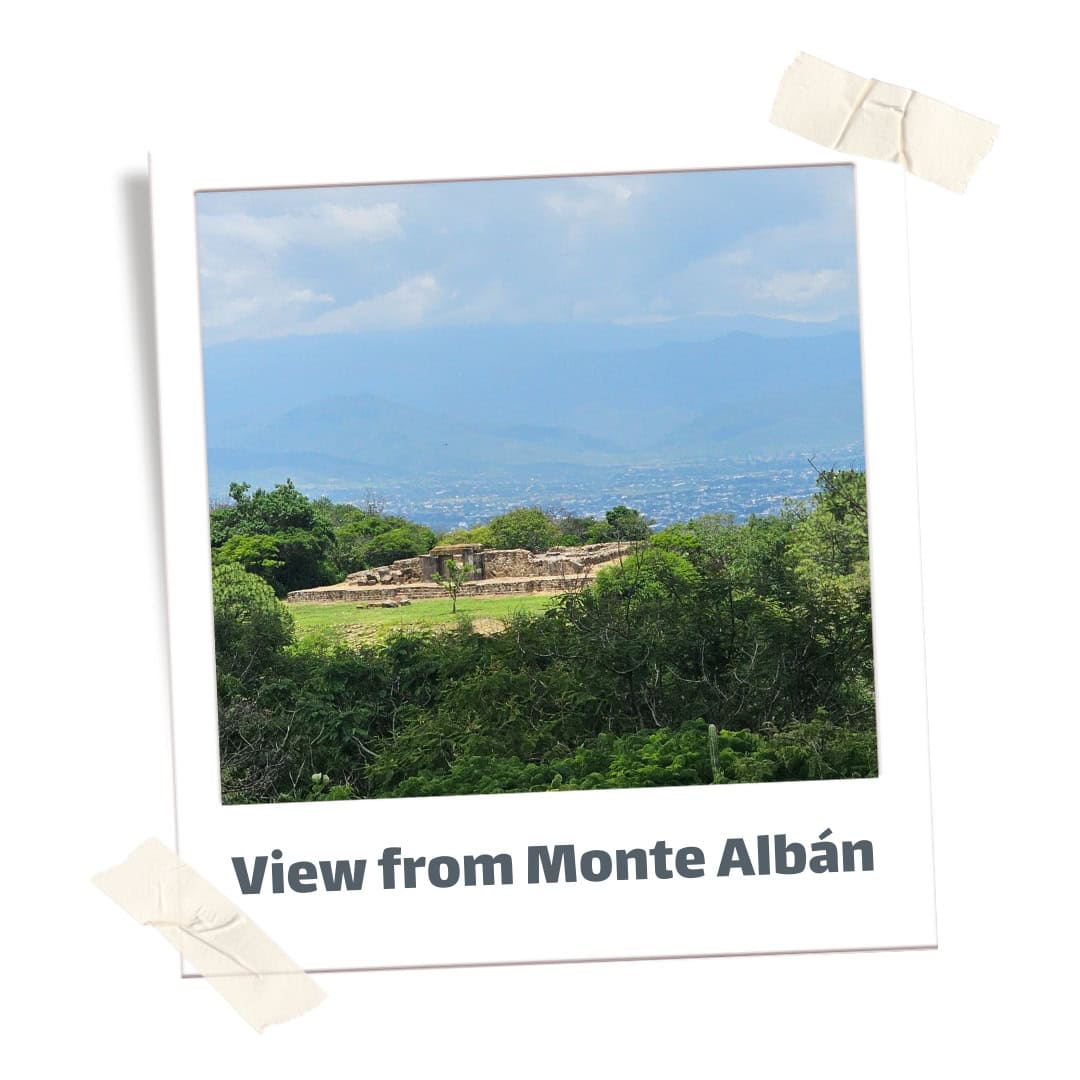
Climbing to the top of the pyramids gives you a stunning view of the Oaxacan Valley below, offering a perspective that the Zapotecs likely found deeply spiritual.
From these heights, it’s easy to see why Monte Albán was strategically located at the convergence of the valley’s three arms.
The Importance of Monte Albán
Monte Albán was not only the capital of the Zapotec world but also a center for the exchange of ideas, culture, and goods. Archaeological evidence suggests that it had ties to the distant city of Teotihuacan and other important Mesoamerican sites.
The Danzantes reliefs, which depict figures believed to be either dancers or sacrificed captives, tell stories of conquest and ceremony that reflect the complex dynamics of power in Zapotec society.
Support the Local Vendors
Before you leave Monte Albán, take time to visit the local vendors set up just outside the site.
Here, you can find handcrafted souvenirs, artisan-made jewelry, and Zapotec-inspired textiles – perfect mementos to remind you of your trip. The vendors also offer cold drinks and ice cream, which are great for cooling off after exploring the ruins under the Oaxacan sun.
By purchasing from these vendors, you’re supporting the local economy and helping the community thrive.
🌍✨Mindful Travel Tip
When visiting Monte Albán, be mindful of its cultural and spiritual significance. Stick to the marked paths, avoid climbing on fragile structures, and always carry reusable water bottles to reduce plastic waste.
Supporting local guides is also a great way to give back to the community and help preserve this incredible heritage site.
Cost: Approximately 90 pesos for foreigner entry, between 300-500 pesos for a guided tour at the site (depending on group size).
2. Hierve el Agua: Oaxaca’s Natural Infinity Pools
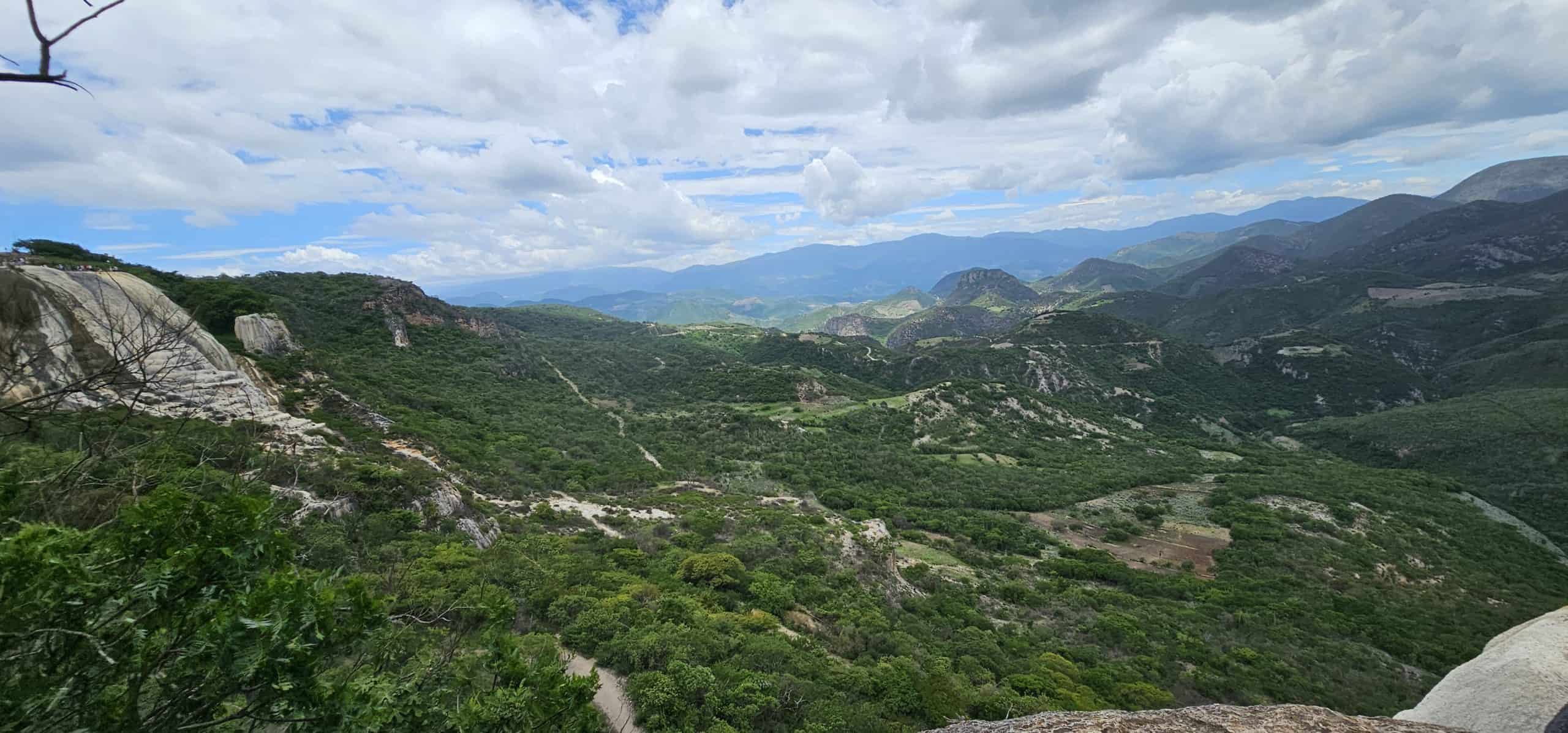
Photo Ⓒ Daena Crosby
Hierve el Agua, about 70 kilometers from Oaxaca City, is one of the region’s most surreal natural wonders.
The name, which means “the water boils,” refers to the bubbling springs that flow over the edge of the cliffs, creating what appear to be frozen waterfalls.
This geological phenomenon has taken thousands of years to form, as minerals in the water have slowly deposited to create these natural sculptures.
The Petrified Waterfalls
The two petrified waterfalls, Cascada Grande (Big waterfall) and Cascada Chica (Small waterfall), are breathtaking formations that look like frozen water cascading down the cliffs.
Visitors can hike to the base of these falls to marvel at their intricate patterns and textures.
From the top, you’ll have panoramic views of the surrounding Oaxacan landscape, making Hierve el Agua a must-see for nature lovers and photographers alike.
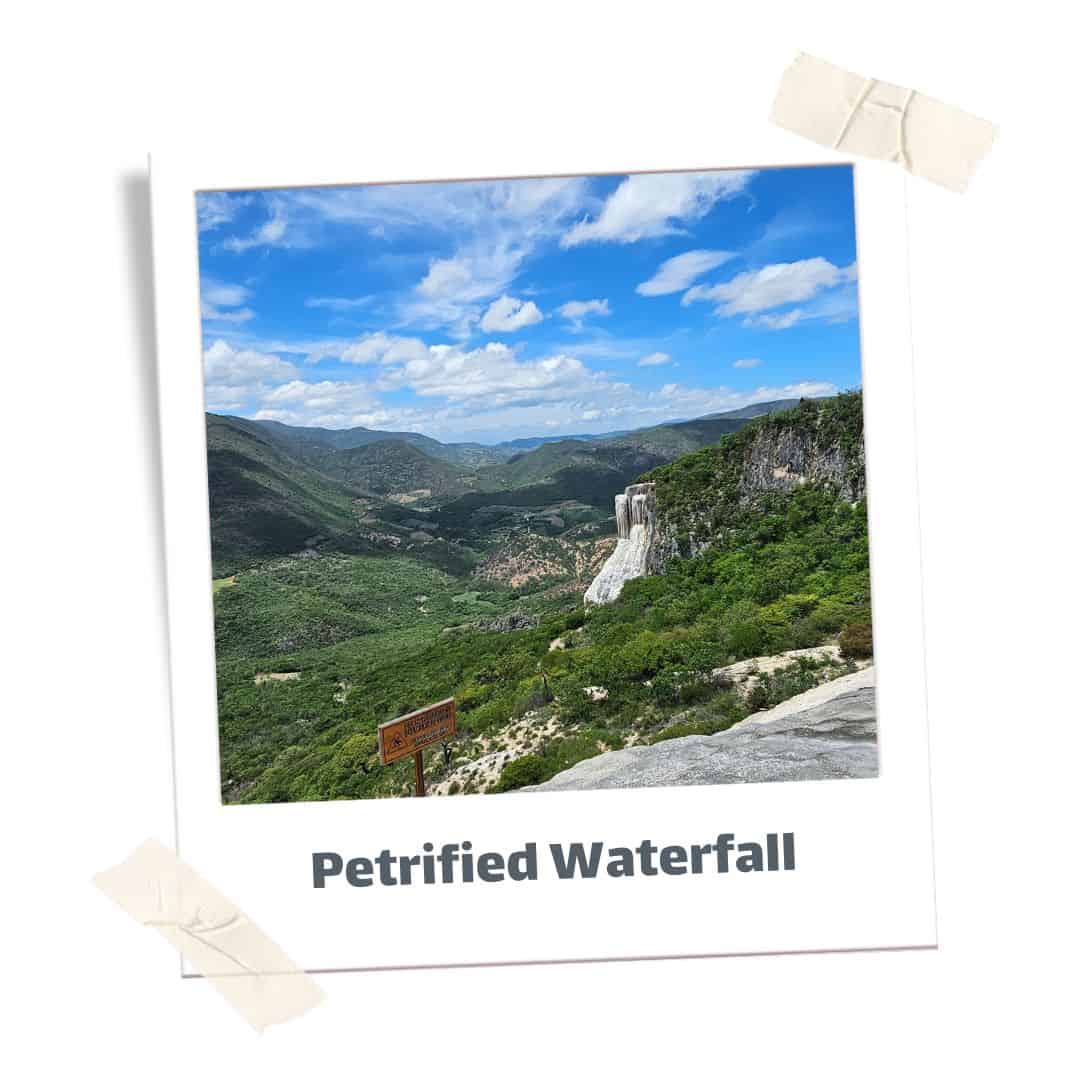
Photo Ⓒ Daena Crosby
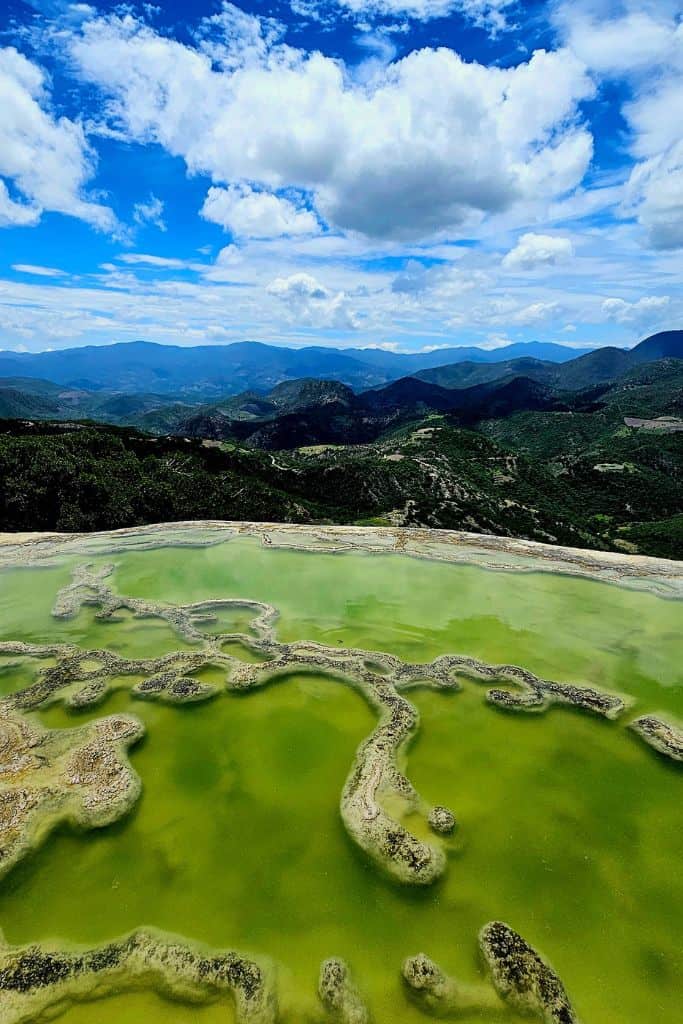
Photo Ⓒ Daena Crosby
Natural Infinity Pools
Perhaps the most iconic feature of Hierve el Agua is its natural infinity pools, which sit right at the cliff’s edge.
These pools, filled with mineral-rich water, offer the perfect place to cool off while soaking in some of the most spectacular views in Oaxaca. Be sure to bring your swimsuit!
The minerals in the water are also said to have healing properties, and the tranquil setting adds to the sense of peace and renewal.
Cost: Approximately 65 pesos for foreigner entry into the park and the site if you enter using the colectivo (shared truck). Colective cost is approximately 100 pesos (40 min ride).
🌍✨Mindful Travel Tip
While Hierve el Agua is a natural site, it’s important to minimize your impact.
Stay on designated paths to avoid damaging the fragile ecosystem, and make sure to pack out all trash.
If you decide to swim in the pools, use eco-friendly sunscreens to protect the water and surrounding environment.
3. Mitla: A Town Steeped in History and Spirituality
Located about 44 kilometers southeast of Oaxaca City, Mitla is an archaeological site with deep spiritual significance for the Zapotec and later the Mixtec people.
While Monte Albán was the Zapotec political center, Mitla served as a religious site, where priests and elites conducted ceremonies related to the afterlife.
The Archaeological Site
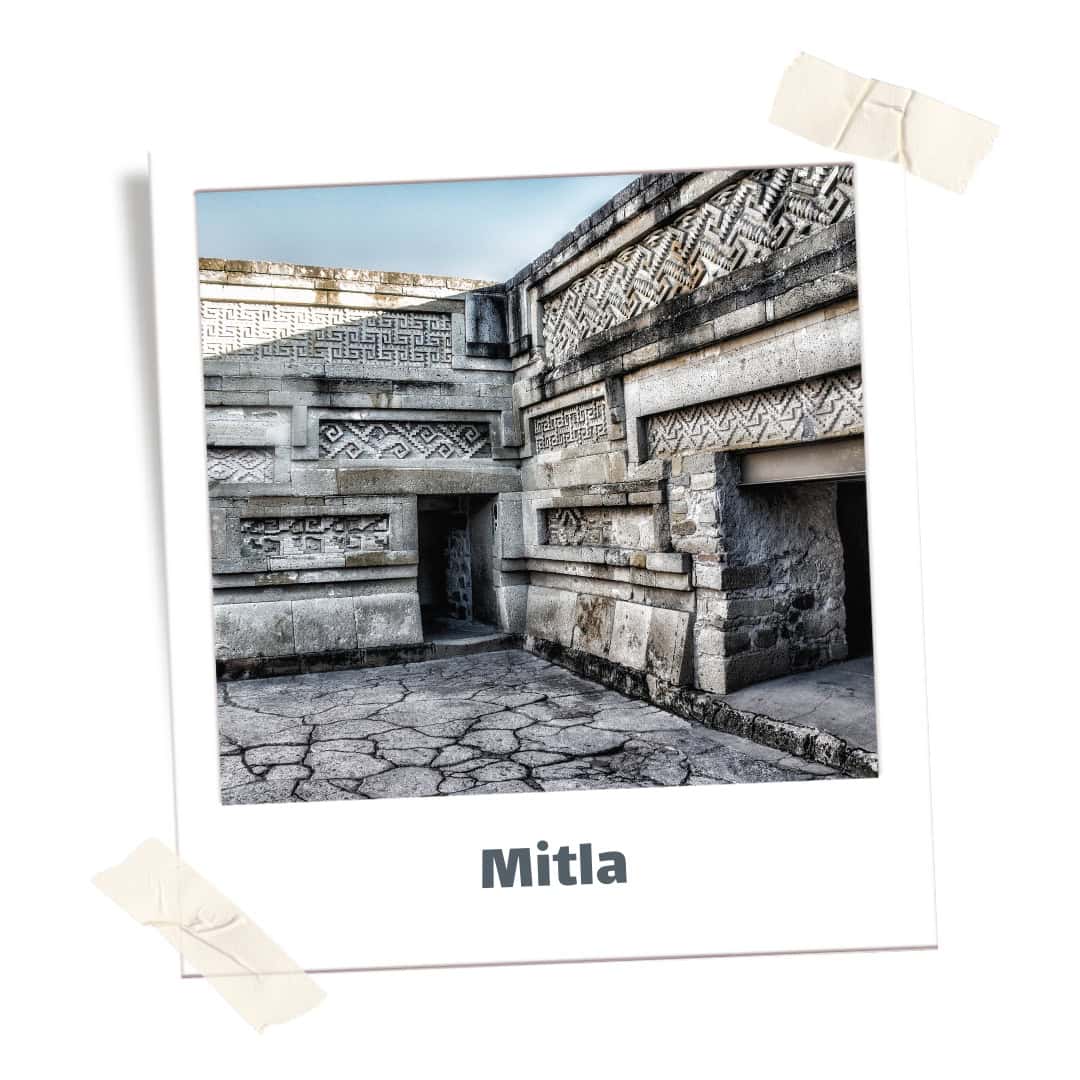
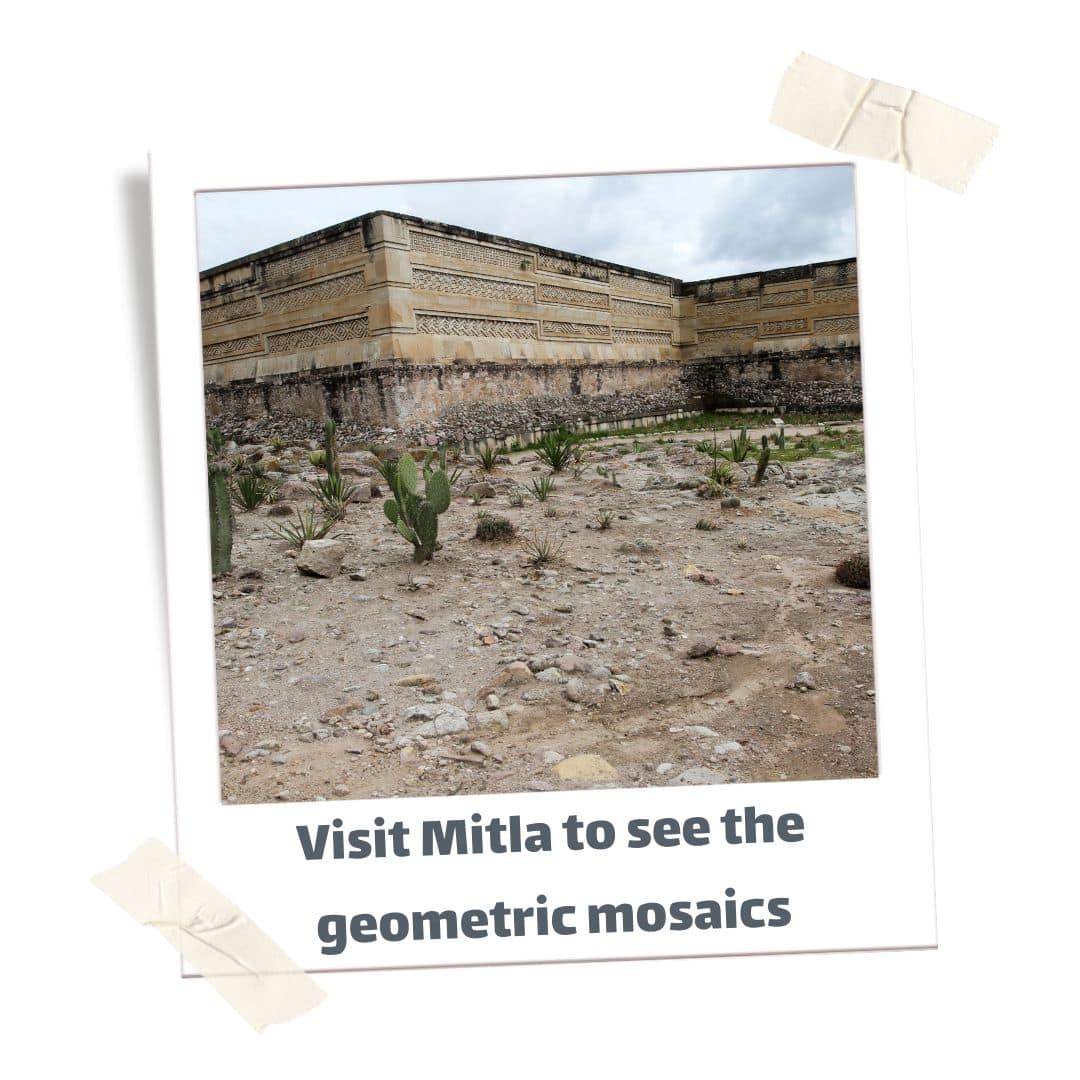
Mitla is renowned for its intricate geometric mosaics, which are unlike anything found at other Mesoamerican sites.
These mosaics, made from thousands of individually cut stones, adorn the walls of the Group of the Columns and the Group of the Church, creating patterns that represent Zapotec cosmology.
The designs are thought to symbolize the journey to the underworld, making Mitla a place of spiritual transition.
Another feature of Mitla is its underground tombs, which were used for elite burials.
These tombs are accessible to visitors, offering a rare glimpse into ancient Zapotec burial practices.
Cost: 90 pesos for foreigners
San Pablo Villa de Mitla, the Modern Town
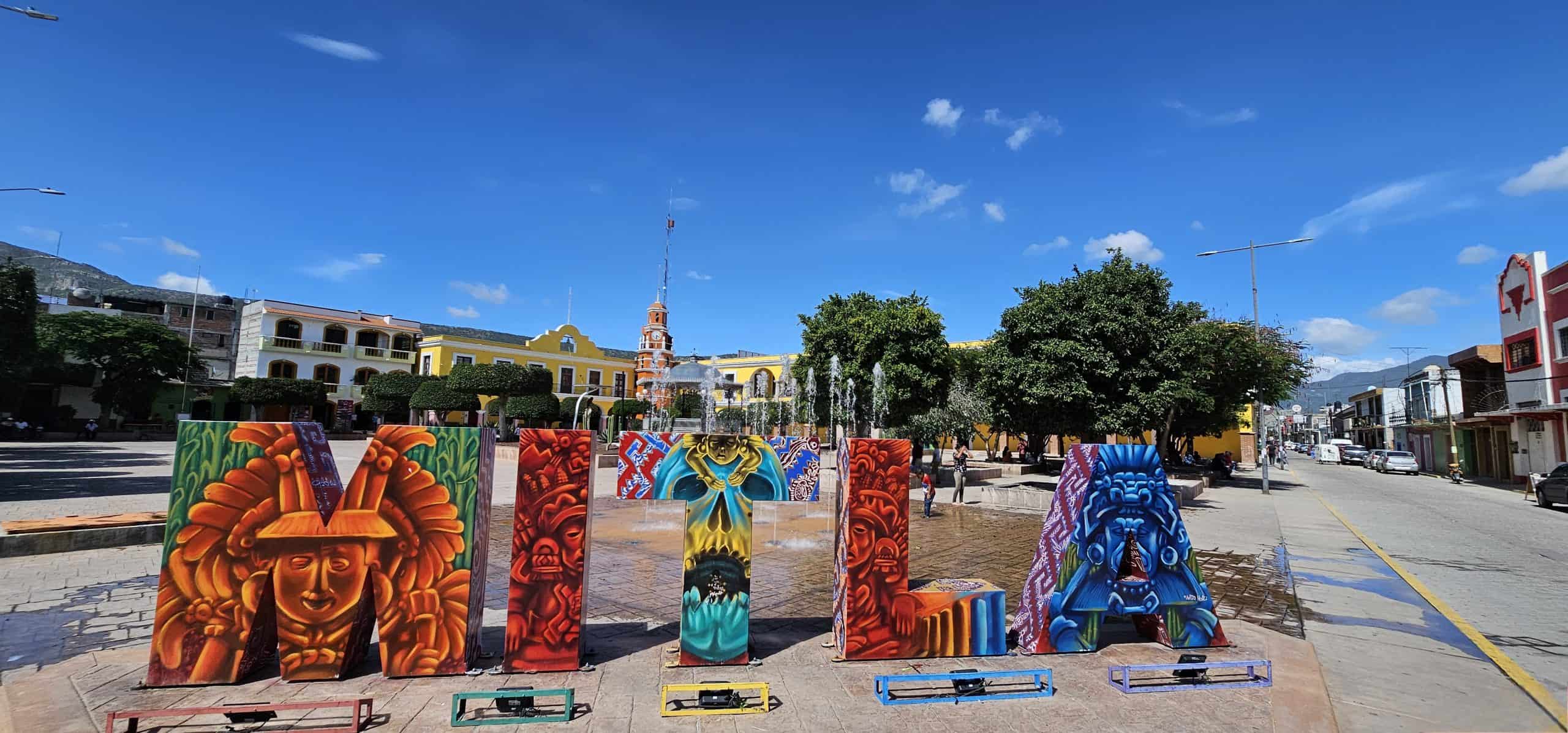
Photo Ⓒ Daena Crosby
Beyond the archaeological site, the modern town of Mitla is a charming place to explore.
Be sure to stop in at the Mercado de Abastos Mitla for an authentic meal!
The town’s markets are full of local artisans selling handwoven textiles, pottery, and other traditional arts.
Mitla is also known for its mezcal production, and you can visit nearby palenques (mezcal distilleries) in and out of town to learn about the mezcal-making process and sample different varieties.
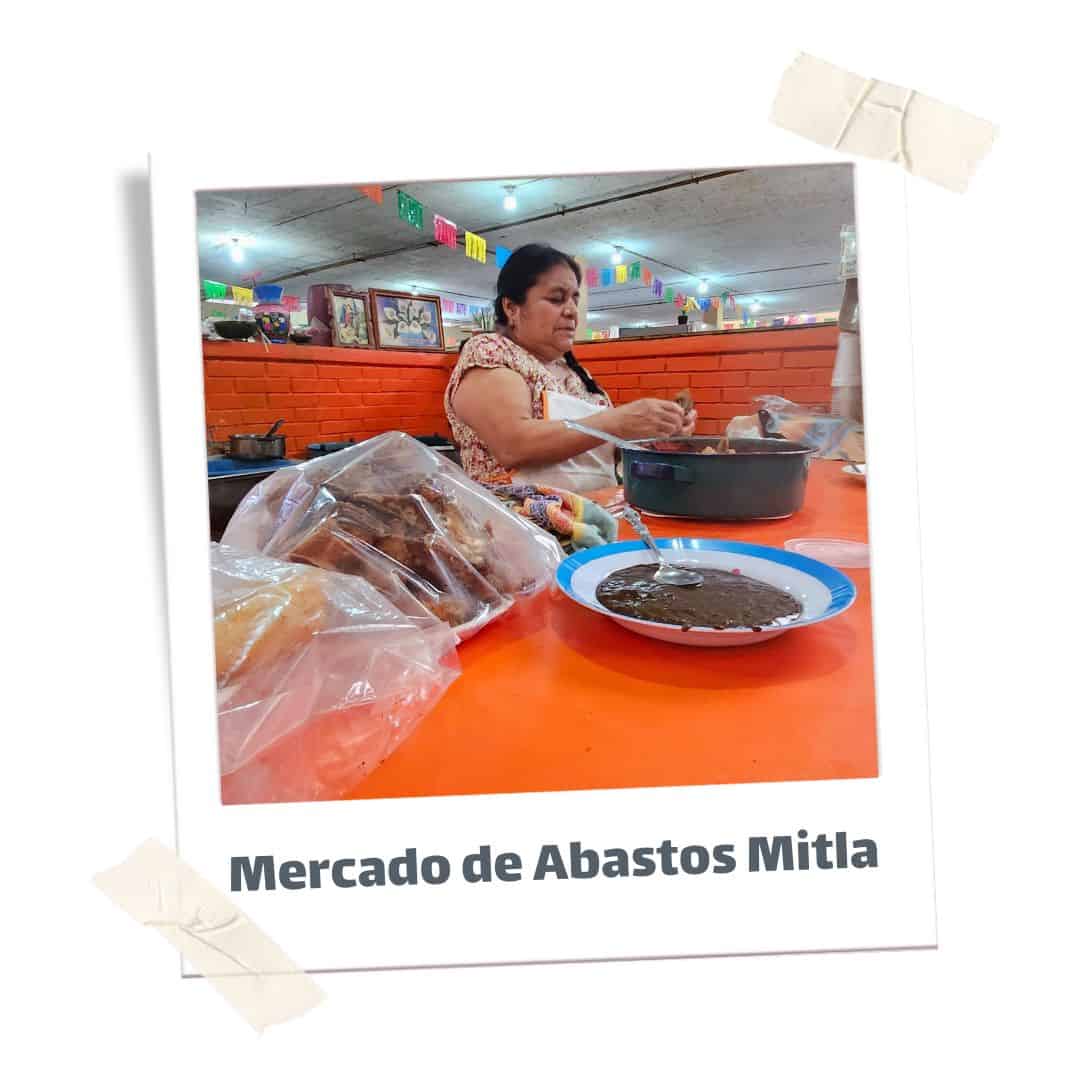
Grateful to this wonderful woman and her daughter for sharing her family’s 50-year tradition and her mother’s black mole recipe with us, along with some Zapotec words! Photo Ⓒ Daena Crosby
🌍✨Mindful Travel Tip
When visiting Mitla, remember that it is still considered a sacred place by many locals.
Show respect by not climbing on the ruins and be mindful of the cultural sensitivity surrounding the tombs.
Supporting local artisans by purchasing their handmade goods also helps preserve the town’s traditions and sustains its economy.
4. Santa María del Tule: Home of the World’s Widest Tree
Just 14 kilometers east of Oaxaca City lies Santa María del Tule, a small-town famous for the Árbol del Tule, the world’s widest tree.
This towering Montezuma cypress has a circumference of over 42 meters (137 feet) and is estimated to be over 2,000 years old!
The Árbol del Tule
The sheer size of the Árbol del Tule is awe-inspiring.
Its trunk is so wide that it was once thought to be multiple trees fused together, but DNA testing has confirmed that it is, in fact, a single organism.
The tree is regarded as sacred by the local Zapotec community, and many people believe it has witnessed the history of the region for millennia.
As you walk around the Árbol del Tule, you’ll notice that the bark forms intricate shapes, with many people claiming to see animals, faces, and other figures in the wood.
Guides are often available to point out these hidden shapes, adding an element of fun to your visit.
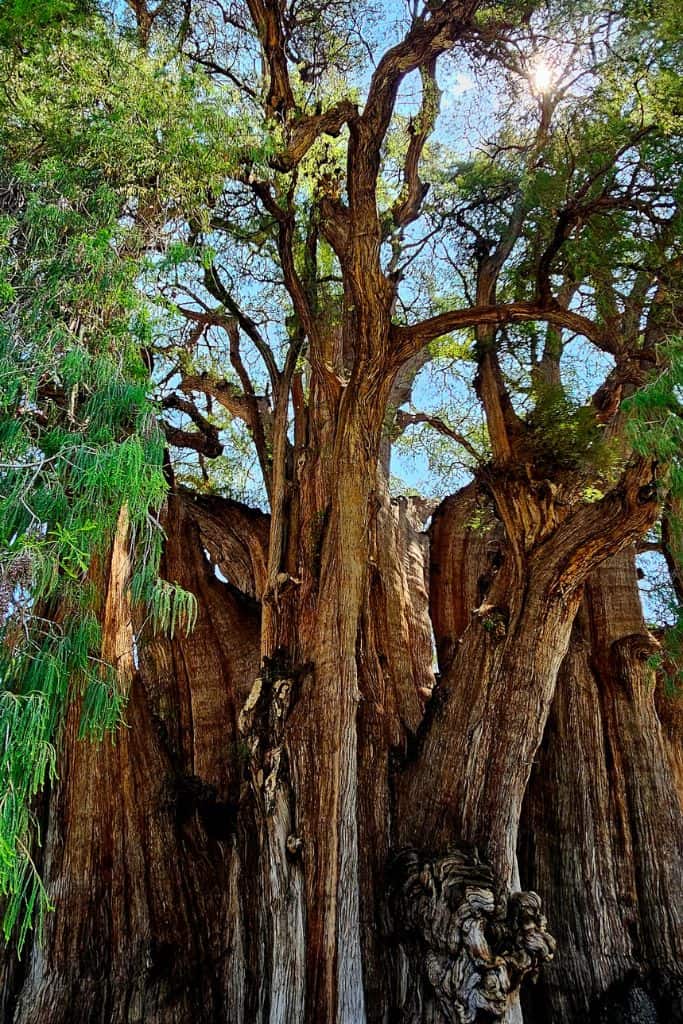
Photo Ⓒ Daena Crosby
Cost: For just 50 pesos, you can enter the gates and get a closer look at both the Árbol del Tule and the nearby Church of Santa María.
The Town of Santa María del Tule
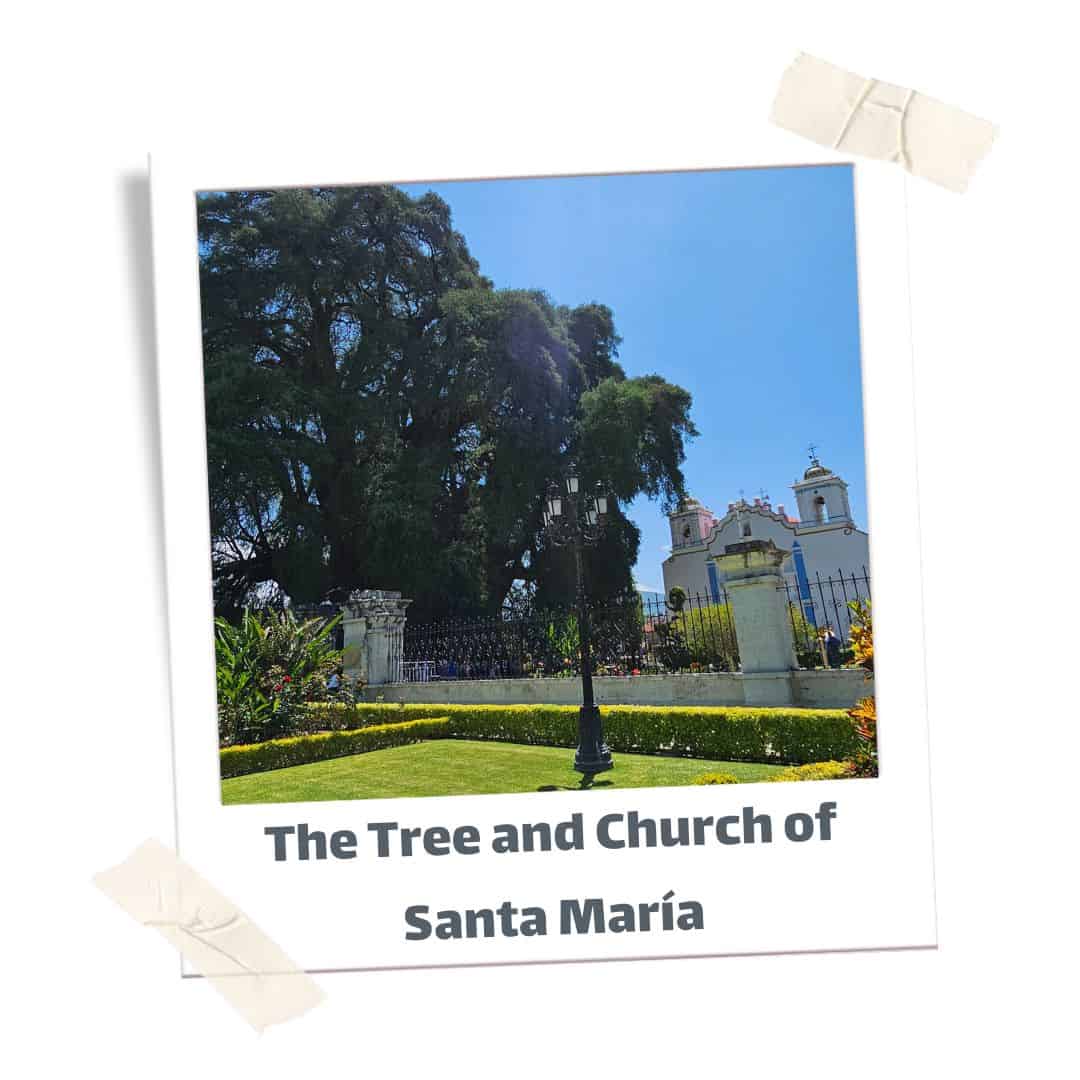
Photo Ⓒ Daena Crosby
While the tree is the main attraction, the town of Santa María del Tule is worth exploring as well.
The Church of Santa María, located next to the tree, is a lovely colonial-era structure with a serene atmosphere.
The town’s artisan and food markets are other highlights, offering delicious Oaxacan street food and handmade arts.
🌍✨Mindful Travel Tip
The Árbol del Tule is an ancient living organism, so it’s important to respect the environment around it.
Avoid touching or damaging the tree and consider hiring a local guide to learn more about its cultural and environmental significance.
Supporting local businesses in the town by purchasing from vendors and artisans also helps sustain the community.
5. Teotitlán del Valle: The Home of Oaxacan Textiles
If you love traditional arts, a trip to Teotitlán del Valle is a must! This small Zapotec village is world-renowned for its woolen textiles, particularly rugs, which are handwoven on backstrap looms.
The weaving traditions in Teotitlán del Valle date back thousands of years, and the village is still one of the most important centers for textile production in Oaxaca.
The Weaving Process
The weavers of Teotitlán del Valle use traditional methods passed down through generations.
The wool is hand-dyed using natural pigments, such as cochineal (a red dye made from insects), indigo, and pomegranate, creating vibrant colours that reflect the natural world.
The rugs are then woven on looms, with intricate designs inspired by Zapotec culture and spirtuality.
Many weavers in Teotitlán del Valle offer workshop tours, where you can watch the entire weaving process and even try your hand at weaving.
These tours are a wonderful way to learn more about the artistry behind the textiles and the significance of certain patterns and colours.

How to Support Local Artists
When purchasing textiles in Teotitlán del Valle, buying directly from the weavers ensures that your money goes back to the community.
Many of the workshops are family-run, and your purchase helps sustain these traditional crafts and provides a livelihood for local families.
🌍✨Mindful Travel Tip
When buying textiles, ask about the dyes and techniques used.
Supporting arts who use natural, sustainable materials helps preserve traditional practices while minimizing environmental impact.
6. Tlacolula Sunday Market: A Vibrant Cultural Experience
The Tlacolula Market, held every Sunday, is one of the largest and oldest markets in the Oaxaca region.
Located in the town of Tlacolula de Matamoros, about 30 kilometers from Oaxaca City, this bustling market is a sensory feast of colours, sounds, and smells!
What to Expect at the Tlacolula Market

The market is very lively, with vendors from surrounding villages coming to sell their goods.
You’ll find everything from fresh fruits and vegetables to handmade pottery, woven textiles, and Oaxacan street food.
One of the highlights of the market is the Pasillo de Carnes Asadas (Grilled Meat Aisle), where you can pick out your meat and have it grilled right in front of you.
The market is also a great place to purchase traditional Oaxacan items like mole paste, chocolate, and mezcal.
It’s not only a place to shop but also a cultural experience that offers insight into the daily life of the region’s Indigenous communities.
Meeting Local Vendors
Meeting the vendors at the Tlacolula Market is one of the best parts of the experience!
Many vendors are from Indigenous Zapotec and Mixtec communities, and shopping at their stalls supports local families.
Take the time to ask about their products, as they’re often happy to explain the traditions behind the items they’re selling.
The market starts early in the morning and lasts until the afternoon, so it’s a good idea to go early to avoid the crowds!
🌍✨Mindful Travel Tip
When shopping at the market, bring your own reusable bags and avoid using plastic!
Oaxaca has strict regulations on single-use plastics, and by using your own bags, you’re helping to reduce waste.
7. Yagul: A Journey to Ancient Mesoamerica
For a more off-the-beaten-path archaeological adventure, consider a trip to Yagul, located about 36 kilometers from Oaxaca City.
While it’s less famous than Monte Albán and Mitla, Yagul is an important Zapotec site with a fascinating history!
Exploring Yagul
Yagul’s ruins include a ball court, several temples, and a fortress built into the surrounding mountainside.
One of the most impressive features of Yagul is its fortified acropolis, which offers panoramic views of the surrounding valley.
The ball court at Yagul is one of the largest in the region, highlighting the importance of the ceremonial ball game in Zapotec culture.
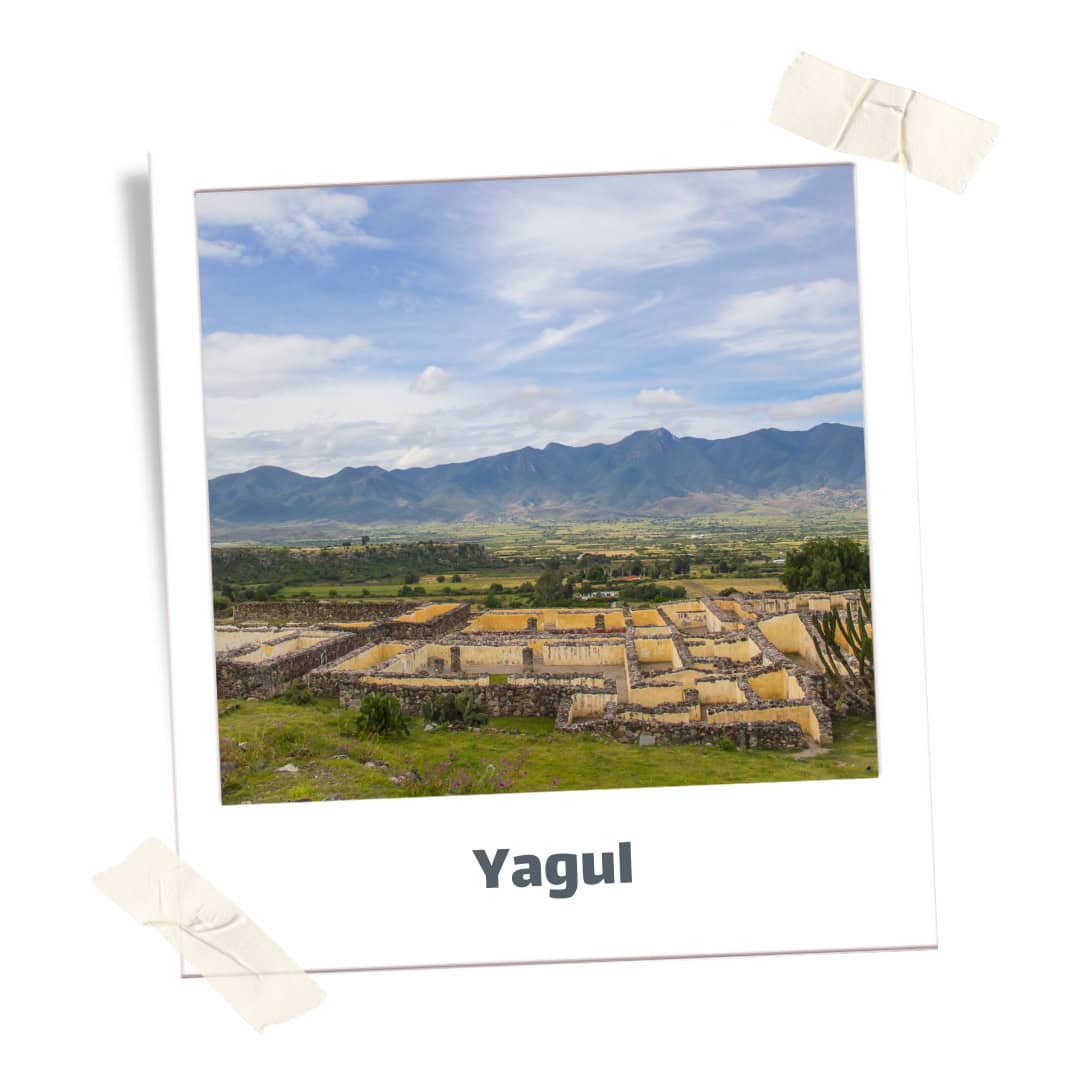
Visitors can also hike the surrounding trails, which offer stunning views of the Oaxacan landscape and the chance to spot local wildlife.
Cost: Approximately 85 pesos for foreigners
🌍✨Mindful Travel Tip
Like other archaeological sites in Oaxaca, Yagul is a fragile place that requires respect from visitors.
Stay on marked paths and avoid climbing on the ruins to help preserve the site for future generations.
8. San Bartolo Coyotepec: The Art of Black Pottery
San Bartolo Coyotepec, located just 15 kilometers from Oaxaca City, is famous for its barro negro (black pottery).
This distinctive pottery, known for its metallic sheen and intricate designs, has been made in the region for centuries.
The History of Black Pottery
The art of making black pottery in San Bartolo Coyotepec dates to pre-Hispanic times.
The clay used to make the pottery is found only in this region, and the traditional methods of shaping and firing the pottery have been passed down through generations.
The black colour is achieved through a unique firing process that reduces oxygen during the firing stage, giving the pottery its characteristic colour.
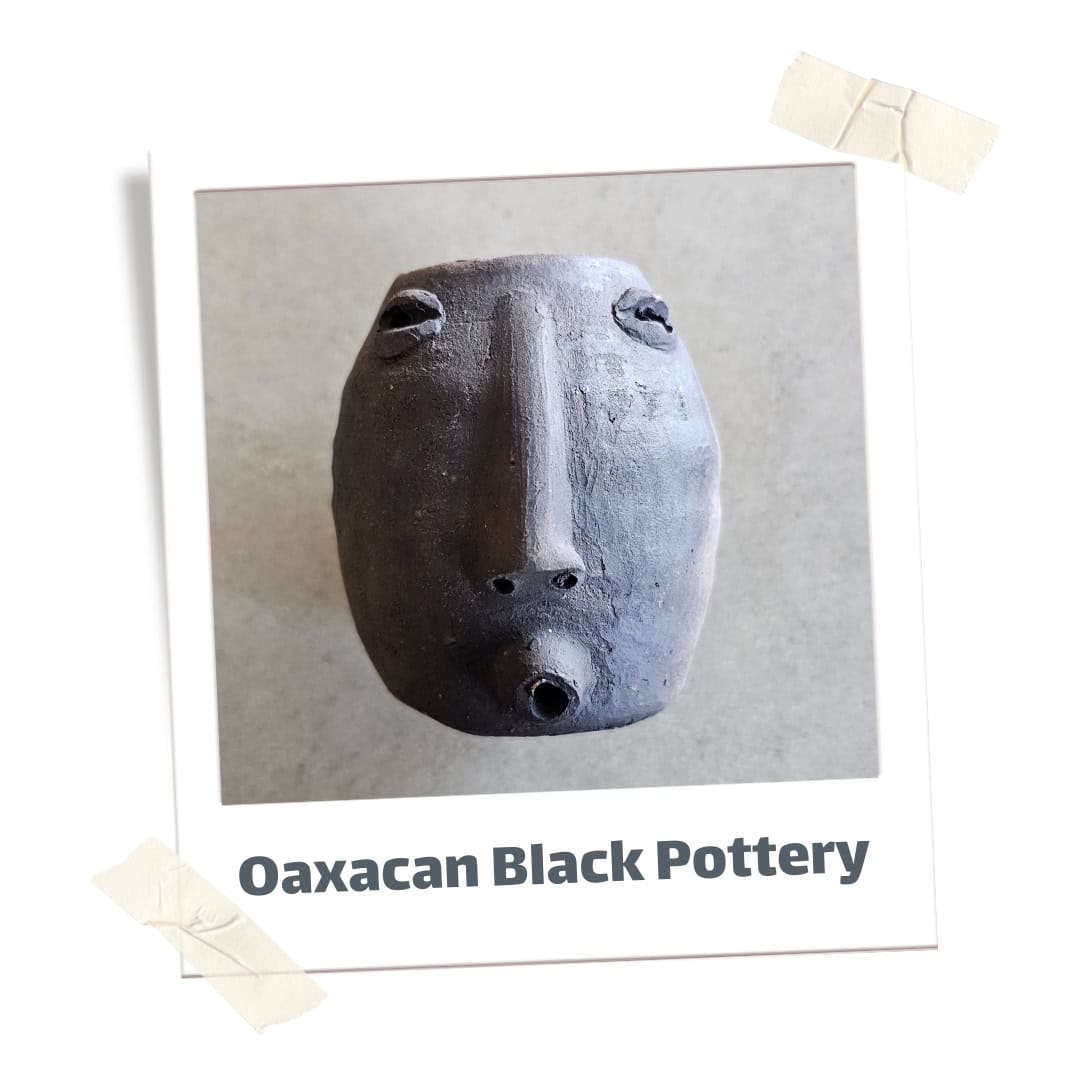
Photo Ⓒ Daena Crosby
Visiting Pottery Workshops
Many of the pottery workshops in San Bartolo Coyotepec are family-run and visiting them offers a chance to see the entire pottery-making process, from shaping the clay to the final firing.
You can also purchase unique pieces directly from the artisans, ensuring that your money goes back into the community.
🌍✨Mindful Travel Tip
When purchasing black pottery, make sure to ask about the crafting process and the significance of the designs.
Supporting artists who use traditional methods helps preserve the cultural heritage of the region.
🚌 How to Get Around – Day trip Travel Options
When I explore different cities in Mexico, I like to use public transportation—whether it’s a bus or colectivo. For me, it’s not just about getting from point A to point B.
Taking public transportation is one of the easiest and most affordable ways to travel. But more importantly, it offers the chance to connect with locals and other travellers and experience a side of Oaxaca you might not see on a typical guided tour.
I’ve found that interacting with people during these rides can lead to some of the most memorable moments.
From chatting with someone who’s on their way to market with fresh produce to learning about daily life in different communities, these interactions can give you a deeper understanding of the people and cultures of Mexico.
Plus, you never know when someone might offer a recommendation for a hidden gem off the beaten path (and there are many)!
Public transportation allows you to be part of the rhythm of local life, and it’s one of the many reasons I love traveling by bus in Mexico.
🚌 Monte Albán
Monte Albán is an easy and convenient day trip from Oaxaca City. You have several transportation options: you can join a guided tour that departs from the zócalo, hire a taxi, or hop on one of the public buses that run regularly from the city center.
Taking a tour with a knowledgeable guide is a fantastic way to gain deeper insight into the historical and cultural significance of this ancient Zapotec site.
If you’re like me and prefer the local bus, head to the Hotel Rivera where you can purchase your ticket for approximately 100 pesos.
From there, it’s just a quick two-block walk to the bus station, making your journey to and from Monte Albán both simple and affordable!

🚌 Hierve el Agua
While Hierve el Agua is located a bit farther from Oaxaca City (approximately 70km) compared to some other day trip destinations, it is well worth the trip!
You have several options to get there: you can take a colectivo (shared van), hire a taxi, or book an organized tour. Most tours also include stops at other nearby attractions like Mitla, making it a full day of exploration through the Oaxacan countryside.
If you prefer to go by public transport, start by taking the local bus to San Pablo Villa de Mitla.
You can catch the bus at the corner of HWY 190 and De Los Derechos Humanos, just east of the Estadio Eduardo Vasconcelos. The Bus will say “Mitla” on the front. The bus ride costs about 20 pesos per adult.
Once you reach Mitla, you can find a colectivo or taxi to take you the rest of the way to Hierve el Agua.
The colectivo is about 40 minutes through the mountains from the town and approximately 100 pesos. You also must pay 15 pesos to enter the park and another 50 pesos to enter Hierve el Agua.
This route is both budget-friendly and offers a chance to see the beautiful Oaxacan landscape along the way.
🚌 Santa María del Tule
Santa María del Tule is an easy day trip from Oaxaca City. You can take a local bus or taxi, or you can stop by the town as part of a guided tour that includes other destinations such as Mitla and Teotitlán del Valle.
You can catch the local bus at the corner of HWY 190 and De Los Derechos Humanos, just east of the Estadio Eduardo Vasconcelos.
The bus ride costs about 20 pesos per adult.
🚌 Mitla
Mitla is easily accessible from Oaxaca City by bus, taxi, or as part of a guided tour. Many tours also include stops at nearby attractions such as Hierve el Agua and Teotitlán del Valle, making it a well-rounded day trip.
If you take the local bus to the town, you can easily get a taxi or colectivo to the archeological site.
🚌 Teotitlán del Valle
Teotitlán del Valle is located about 25 kilometers from Oaxaca City and is easily accessible by bus or taxi.
Many visitors choose to combine a trip to Teotitlán del Valle with other nearby sites such as Mitla and Hierve el Agua.
🚌 Tlacolula Market
Getting to the Tlacolula Market is simple. You can take a bus or taxi from Oaxaca City or join a guided tour that includes the market as one of its stops.
🚌 Yagul
Yagul is located along the same route as Mitla, making it an easy addition to a day trip that includes other nearby sites. You can reach Yagul by bus, taxi, or guided tour.
🚌 San Bartolo Coyotepec
San Bartolo Coyotepec is an easy day trip from Oaxaca City. You can reach the town by bus, taxi, or as part of a guided tour.
Oaxaca Travel Guide
Where Is Oaxaca Located?
Oaxaca is in southern Mexico, about 470 kilometers southeast of Mexico City. It is the capital of the state of Oaxaca and is surrounded by mountains, valleys, and important archaeological sites.
When planning your trip to Oaxaca, you might come across references to both Oaxaca the city and Oaxaca the state – and it’s important to know that these aren’t the same thing!
While Oaxaca City (or Oaxaca de Juarez) is the capital and cultural heart of the state, the State of Oaxaca is a vast and incredibly diverse region filled with stunning landscapes, Indigenous communities, and unique experiences.
Oaxaca the City
Oaxaca City (officially Oaxaca de Juárez) is the capital of the state and one of the most beautiful and culturally rich cities in all of Mexico.
It’s renowned for its colonial architecture, vibrant arts scene, traditional markets, and delicious food.
If you’re drawn to food, history, and art, Oaxaca City is the place to immerse yourself in Oaxacan cultures while enjoying modern-day comforts.
The city is a hub for events like La Guelaguetza, an annual Indigenous cultural festival, and a gateway to world-renowned day trips to sites like Monte Albán and Hierve el Agua
Oaxaca the State: A Land of Diversity
The State of Oaxaca is one of the most geographically and culturally diverse regions in Mexico.
It’s home to 8 regions and 16 Indigenous groups, each with its own language, traditions, and rich histories.
Traveling beyond the city allows you to explore the state’s diverse landscapes—from the rugged Sierra Madre mountains to the stunning Pacific coastline of Huatulco and Puerto Escondido.
The state also encompasses magical villages like Teotitlán del Valle, known for its master weavers, and San Bartolo Coyotepec, famous for its black pottery.
Exploring Both the City and the State
Many travelers begin their journey in Oaxaca City, exploring the city’s historic streets, museums, and markets before venturing out into the surrounding pueblos (villages) and natural wonders.
Day trips from Oaxaca City allow you to experience some of the state’s highlights, like the ancient ruins of Mitla, the Árbol del Tule, and traditional mezcal distilleries.
But for those who have more time, spending several days exploring the coastline, mountains, and Indigenous villages will give you a fuller understanding of the State of Oaxaca’s incredible diversity.
Why Understanding the Difference Matters
Understanding that Oaxaca is both a state and a city is important for planning your trip and ensuring you make the most of your visit.
Oaxaca City serves as the perfect base for discovering the wonders of the state, but there’s so much more to explore beyond the city limits.
Whether you’re visiting to hike in the mountains, relax on a beach, or learn from local artisans, Oaxaca State offers a wide array of experiences that make it one of the most fascinating regions in Mexico.
Best Time to Visit Oaxaca
The best time to visit Oaxaca is during the dry season, which runs from November to April. During this time, the weather is mild, and outdoor activities are more enjoyable.
Oaxaca also hosts several festivals throughout the year, including the famous Guelaguetza in July, which celebrates the region’s Indigenous cultures.
Accommodations
Consider staying in locally owned guesthouses or eco-friendly hotels to support the local economy and minimize your environmental impact.
Eating Sustainably
Oaxaca is famous for its cuisine, and eating at locally owned restaurants or markets helps ensure that your meals are made from locally sourced ingredients.
Cultural Awareness
Learn a few basic Spanish phrases to connect with locals, and always be respectful of cultural customs, especially at sacred sites.
Day Trips from Oaxaca: Build Lasting Connections and Memories
Day trips from Oaxaca offer more than just beautiful sights—they provide an opportunity to connect with the region’s histories, cultures, and people.
By traveling responsibly, supporting local economies, and respecting Indigenous traditions, you can ensure that your journey has a positive reciprocal impact.
Whether you’re exploring ancient ruins, swimming in mineral pools, or purchasing handmade textiles, your travels can contribute to the preservation of Oaxaca’s rich heritage and create meaningful connections that last long after your trip is over.
✨Keep Exploring Mexico Magic✨
👉✨ Best Time to Travel to Oaxaca: A Guide to Seasons, Festivals, and Coastal Treasures
👉✨ 7-Day Ultimate Mexico Itinerary: From Mexico City to Oaxaca
👉✨ Sayulita Hidden Gems: Local Businesses You’ll Love to Support